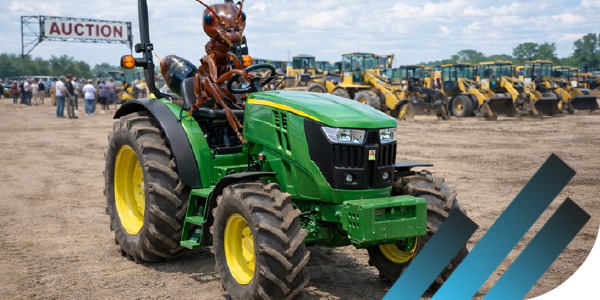
Auctioneers handling vehicles, plant and equipment in Queensland are asked to join the fight against fire ants, with heightened biosecurity obligations where assets originate from properties within designated fire ant biosecurity zones. This risk is most acute for machinery with soil or organic material attached, including used agricultural equipment, earthmoving machinery and vehicles stored outdoors.
Red imported fire ants (Solenopsis invicta) are among Australia’s most serious invasive pests, posing risks to human health, agriculture, infrastructure and the environment. While fire ants can spread naturally through flight, flooding and underground movement, human-assisted movement of contaminated materials is recognised as the single greatest threat to eradication efforts in southeast Queensland.
Under the Biosecurity Act 2014 (Qld), auctioneers are subject to the ‘general biosecurity obligation’. This applies where a person knows, or ought reasonably to know, that their activities may pose a biosecurity risk. Auctioneers dealing in fire ant carriers, including machinery or equipment with soil attached, must take all reasonable and practical steps to prevent or minimise the spread of fire ants.
Any suspected fire ant detections must be reported to Biosecurity Queensland within 24 hours. For more information on the risks that fire ants present to the economy, auctioneers’ regulatory obligations and the free training that’s available, visit:
For auction businesses moving vehicles, plant and equipment around, it is important to know that there are regulations that impose specific controls on moving fire ant carriers from within Queensland fire ant biosecurity zones. Failure to comply with these controls is treated as a failure to meet the general biosecurity obligation and can attract severe penalties, including fines of up to $124,500 units or imprisonment
Practical risk management steps are therefore essential. Auctioneers should confirm the origin of consigned assets, ensure machinery is thoroughly inspected by trained staff, and verify that prescribed risk-mitigation measures have been applied before movement. All equipment used for handling or transporting consignments must be cleaned of soil and organic material before leaving or entering a site. The website above offers guidance on the free training that’s available.
Robust inspection, cleaning and record-keeping practices not only protect buyers and the broader community from the risks of fire ants but also provide critical evidence of due diligence by auctioneers should compliance ever be questioned.
AVAA’s engagement with government on this issue is driven by members serving on the AVAA Government Affairs Committee.

Interested In Finding Out More?
For further information on AVAA’s engagement with the Australian and state governments on this issue, please send an email to policy.advocacy@avaa.com.au or telephone 1300 928 165. You can also stay up to date by following AVAA on LinkedIn, X/Twitter and Facebook.