

So You Want To Become An Antiques Valuer …
.
Antiques valuers assess the value of historic objects such as furniture, ceramics, silver and decorative arts. Their work involves carefully examining items to determine age, origin, craftsmanship and historical context while considering how similar objects perform in collector markets.
To determine value, the valuer studies maker’s marks, materials, construction techniques and condition. Research into auction results and historical references helps identify comparable objects and establish where the item sits within the antiques marketplace.
Typical Tasks —
• Inspect antiques for maker’s marks and construction techniques
• Research historical origin
• Analyse auction records
• Prepare valuation reports
Where Do Antiques Valuers Work —
Antiques valuers commonly work with auction houses and antique dealers, many of which are AVAA member companies, plus museums and private collectors. Their services are often required for insurance valuations, estate administration and sale preparation. Some valuers operate as independent consultants while others work within specialist auction firms handling decorative arts. Inspections may occur in auction rooms, galleries, private homes or institutional collections.
Skills And Personal Qualities —
Antiques valuers must identify materials, maker’s marks and stylistic characteristics that reveal the history of an object. Strong research ability and attention to detail are essential.
Knowledge And Training —
Experience in auction houses, antique dealerships or museums often forms the foundation for antiques valuation. Some valuers undertake higher education studies in art history, decorative arts or museum studies, such as a Bachelor of Fine Arts (BA), Bachelor of Visual Arts (BVA), or Bachelor of Design (BDes).
The AVAA Foundation Course in Valuing Fine and Decorative Arts and Antiques provides grounding in valuation methodology and reporting.
Professional Tools Of The Profession —
Magnification tools, ultraviolet lamps, reference catalogues and auction archives help valuers examine objects and research provenance.
Professional Standards —
The AVAA Certified Valuer (CVAu) credential represents a recognised benchmark for valuers working with antiques and decorative arts.
Why Professional Antiques Valuers Matter —
Historic objects often carry cultural and financial significance. Professional valuers provide independent opinions that help collectors and institutions understand value and provenance.
…

Interested In Finding Out More?
For further information AVAA’s careers guidance, please send an email to careers@avaa.com.au or telephone 1300 928 165. You can also stay up to date by following AVAA on LinkedIn, X/Twitter and Facebook.

.
— Career Information
◾AVAA Careers Home
◾Auctioneer
◾Artwork Valuer
◾Jewellery Valuer
◾Plant & Machinery Valuer
◾Vehicle Valuer
◾AVAA Jobs Board
.



Auction & Valuation Sector News Updates
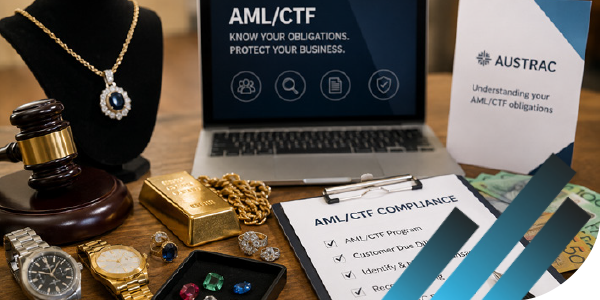
AML/CTF Compliance Update For Auctioneers *
Emma Barnes2026-09-04T09:34:04+10:00September 3rd, 2026|
Australia’s expanded anti-money laundering and counter-terrorism financing (AML/CTF) framework brings new obligations for some auction houses and dealers handling jewellery, watches, precious metals, gemstones and related products. The rules apply where a business buys [...]

ATO Guidance On Market Value For Tax Purposes *
Emma Barnes2026-08-24T10:51:45+10:00August 24th, 2026|
The Australian Taxation Office (ATO) provides clear guidance on determining market value under Australia’s taxation and superannuation laws. Valuers preparing reports for tax compliance purposes should understand and apply this guidance so their methodology, [...]

Cash, Crypto Currency And Jewellery Auctions
Emma Barnes2026-05-25T04:53:25+10:00May 25th, 2026|
Auctioneers dealing in jewellery, previous stones, watches, bullion-related products and related goods should now be carefully reviewing the incoming anti-money laundering and counter-terrorism financing (AML/CTF) reforms being introduced by Austrac, particularly if they are [...]