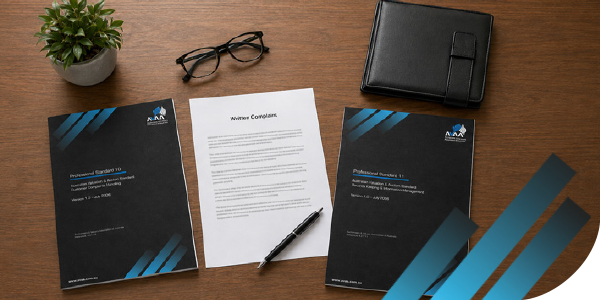

A periodic assessment as to whether the nation’s leading auctioneers are meeting their requirements to have trust accounts is now being undertaken by the Auctioneers and Valuers Association of Australia (AVAA). The assessment forms part of AVAA’s continuing commitment to ensuring that its professional credentials are supported by accountable, ethical and consumer-focused practices.
Handling client money is one of the most significant responsibilities entrusted to an auction business. An auctioneer may receive deposits or purchase payments from buyers and hold sale proceeds that ultimately belong to vendors. These funds can be substantial and may remain in the auctioneer’s control while transactions are completed, commissions and authorised expenses are calculated, and proceeds are prepared for distribution.
The industry benchmark is AVAA Professional Standard 4 – Auction client funds handling that establishes clear minimum requirements for managing that responsibility. A professional with the respected AVAA Certified Auctioneer (CAAu) credential or an AVAA Corporate Member that receives or holds client funds must maintain a designated trust account with an authorised deposit-taking institution. Client money must be deposited into that account as soon as reasonably practicable, kept separate from the business’s operating funds and used only for its intended purpose.
This separation is fundamental to consumer protection. It helps prevent client funds from being mixed with the auction business’s own money or used to meet wages, rent, supplier accounts and other operating expenses. It also provides a clear distinction between money owned by the business and money held on behalf of buyers, vendors or other parties.
The Industry Standard For Trust Accounts —
Developed by leading auctioneers themselves, AVAA Professional Standard 4 requires auction businesses receiving or holding client funds to use a designated trust account, keep client money separate from operating funds, promptly record receipts, authorise withdrawals and regularly reconcile balances. Complete, traceable records must be maintained, and the trust account must undergo an annual independent audit. These safeguards promote transparency, integrity and responsible management of money belonging to buyers and vendors.
The requirements of AVAA Professional Standard 4 extend well beyond simply opening a trust account. Auction businesses must maintain accurate and complete records showing the client to whom funds relate, the amount and date received, the purpose of the payment, and the date and authority for every withdrawal or disbursement. All withdrawals must be authorised by a responsible person and must accord with the client’s instructions or the terms of the transaction.
Regular reconciliation is also required under AVAA Professional Standard 4, allowing the auction business to identify discrepancies promptly and demonstrate that the balance held is supported by its records. Most importantly, any auction business maintaining a trust account must arrange an annual audit by an appropriately qualified independent auditor.
Independent auditing provides an additional layer of protection. It tests whether funds have been handled correctly and whether the supporting trust accounting records meet professional and regulatory requirements. It also gives AVAA an objective basis upon which to assess compliance. As part of the current assessment, AVAA may request evidence such as an independent auditor’s report and supporting information demonstrating that these obligations are being met.
Periodic compliance assessments give practical effect to professional standards. A standard provides confidence when it is understood, applied and supported by appropriate oversight. The present assessment encourages sound systems, identifies areas requiring improvement and demonstrates that accountability is an ongoing obligation.
Consumers selecting an auctioneer should therefore look for the respected CAAu credential or choose an AVAA Corporate Member. These auctioneers have committed themselves to recognised professional requirements governing the handling of client money, financial records, authorised payments, reconciliation and independent audit.
Why Consumers Should Look For A Certified Auctioneer —
Clients should choose an auctioneer with the respected CAAu credential or AVAA Corporate Member because they have committed to recognised professional standards, ethical conduct and accountability. Their obligations include safeguards for client money, proper record keeping and independent oversight. This provides a meaningful level of assurance when appointing an auctioneer and helps consumers identify professionals who place integrity, transparency and protection at the centre of every auction transaction.
The CAAu credential and AVAA Corporate Membership provide consumers with a meaningful point of distinction in the marketplace. They indicate that the auctioneer operates within a broader framework of professional standards, ethical conduct and accountability.
When money is placed in an auctioneer’s care, skill on auction day is only part of the service. Secure financial administration, transparent records and responsible oversight are equally important. By choosing a certified auctioneer or AVAA Corporate Member, consumers can engage an auction professional who has made a clear commitment to protecting client funds and maintaining confidence in the auction process.
.
.
Interested In Finding Out More?
If you’d like more information on the AVAA Professional Standards, send an email to standards@avaa.com.au or telephone 1300 928 165. You can also stay up to date by following AVAA on LinkedIn, X/Twitter and Facebook.
.