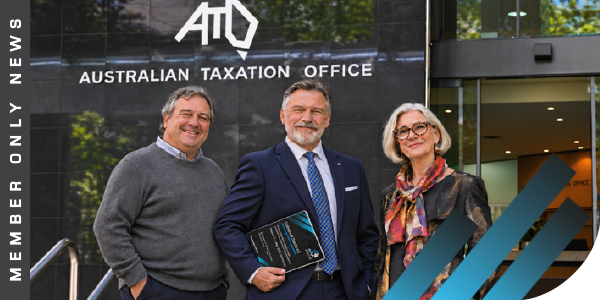
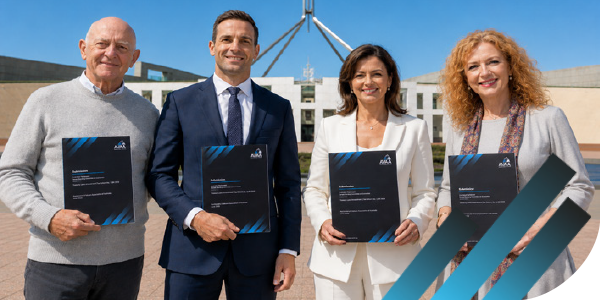
The nation’s certified valuers have lodged a detailed submission to the Senate Standing Committee on Economics regarding the capital gains tax reforms set out in the Treasury Laws Amendment (Tax Reform No. 1) Bill 2026 (Cth), highlighting the critical role valuation will play in the successful implementation of the proposed changes.
While much of the public debate surrounding the reforms has centred on housing affordability, investment behaviour and taxation policy, the submission from the Auctioneers and Valuers Association of Australia (AVAA) focuses on a different but equally important issue, this being how the reforms will operate in practice once they become law. According to the submission, the effectiveness of the reforms will depend not only on legislative design but also on the existence of a robust valuation framework capable of supporting taxpayers, advisers and regulators.
The submission argues that valuation will become a far more significant component of Australia’s tax system under the proposed arrangements. The requirement to distinguish gains accrued before and after 1 July 2027 means that valuation evidence will become central to determining taxation outcomes across a broad range of assets. While legislation determines what is taxable, valuation frequently determines how much is taxable.
Importantly, the capital gains tax reforms affect much more than residential property. AVAA notes that the proposed framework will apply across a diverse range of assets including businesses, plant and equipment, motor vehicles, fine art, antiques, collectables, cultural property, intellectual property and specialised industrial assets. Many of these assets operate within markets that differ substantially from residential property markets, often featuring limited transaction activity, fragmented market evidence and a greater reliance on professional judgement.
A major focus of AVAA’s submission on the proposed capital gains tax changes is establishing a valuation baseline as at 1 July 2027, described as one of the most significant practical challenges arising from the reforms. Millions of taxpayers may ultimately need to establish, support or defend values as at the commencement date, with those values potentially remaining relevant for decades into the future. A family business sold in twenty years’ time or a significant artwork sold in thirty years’ time may still rely on valuation evidence established in 2027.
The AVAA submission strongly supports the use of contemporaneous valuation evidence wherever practical. Valuations prepared close to the commencement date benefit from direct inspection, readily available records and current market evidence. At the same time, AVAA acknowledges that many taxpayers will not obtain valuations in 2027 and that retrospective valuations will therefore become an unavoidable feature of the system. The submission notes that retrospective valuations are a recognised professional discipline regularly relied upon by courts, tribunals, government agencies and private parties in taxation, family law, deceased estate and commercial matters.
Particular attention is also given to pre-CGT assets and other long-held property. Many of these assets have existed outside the capital gains tax system for decades and are often characterised by incomplete records, changing conditions and limited historical documentation. The submission argues that practical evidentiary standards and clear guidance will be essential if taxpayers are to confidently establish commencement values and demonstrate compliance with the new framework.
AVAA’s submission contains some twenty recommendations, developed by those with the AVAA Certified Valuer (CVAu) credential, aimed at improving implementation outcomes and reducing future disputes. Central among these is a recommendation that Treasury and the Australian Taxation Office jointly develop a formal Capital Gains Tax Valuation Framework before commencement of the reforms. AVAA believes such a framework should provide guidance on valuation methodologies, evidentiary requirements, record keeping obligations, retrospective valuations, specialist asset classes, compliance expectations and dispute minimisation measures.
The submission also emphasises the importance of professional competency and recognised standards as valuation assumes a more prominent role within tax administration. Confidence in taxation outcomes depends heavily on confidence in the valuation evidence supporting those outcomes. For that reason, AVAA has recommended that implementation guidance recognise the value of professional standards, continuing professional development, professional accountability and appropriate specialist expertise.
AVAA notes that existing professional frameworks already provide a foundation upon which the Australian Government can build. The respected AVAA Certified Valuer (CVAu) credential establishes competency and accountability requirements for valuers working across a diverse range of asset classes, while the AVAA Professional Standards provide guidance on valuation reporting, professional conduct and ongoing professional development. The submission suggests that engaging with AVAA to leverage the existing professional infrastructure would assist Treasury and the Australian Taxation Office in developing a practical and effective implementation framework.
The submission represents another example of AVAA’s member-driven advocacy in action with the lead being taken by the AVAA Government Affairs Committee. Drawing on the practical experience of valuers working across specialist asset classes throughout Australia, it seeks to ensure that the valuation implications of the proposed reforms are fully understood before implementation begins. By contributing practical expertise at an early stage, AVAA is helping shape a framework that supports taxpayers, reduces disputes, strengthens compliance outcomes and promotes confidence in the administration of Australia’s capital gains tax system.
As CGT reforms continue to develop, AVAA will remain actively engaged with the Australian Government to ensure that valuation expertise contributes to the creation of a practical, workable and trusted framework. Importantly, AVAA is collaborating with the Council of Small Business Organisations of Australia (COSBOA) on the CGT reforms to ensure the interests of its members are best protected.
Don’t miss the 2026 Australian Valuers Symposia where the CGT reforms will be discussed in Sydney on 22 October 2026, Melbourne on 20 October 2026, and Brisbane on 23 October 2026. Secure your tickets and register online today.
.
Interested In Finding Out More?
If you’re interested in AVAA’s policy advocacy associated with the Capital Gains Tax reforms, send an email to government.affairs@avaa.com.au or telephone 1300 928 165. You can also stay up to date by following AVAA on LinkedIn, X/Twitter and Facebook.
.