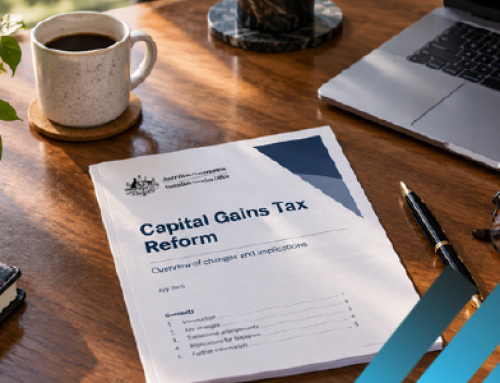
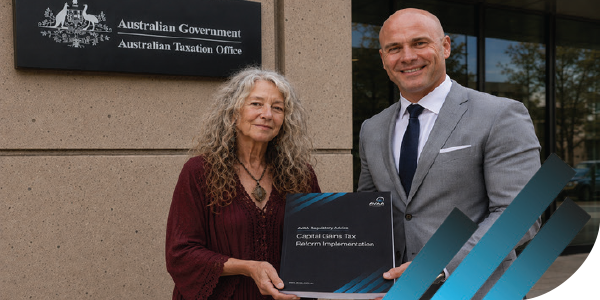
As the Australian Taxation Office (ATO) works on the implementation of the proposed capital gains tax reforms, the attention of certified valuers is focusing on four key issues. These are establishing capital gains tax asset values as at 1 July 2027, managing retrospective valuations, valuing assets in thin markets, and confirming that market value, rather than insurance or replacement value, forms the basis of capital gains tax calculations.
The formal written advice from the Auctioneers and Valuers Association of Australia (AVAA) to the ATO is that clear guidance and an appropriate valuation framework will be essential to reducing disputes and improving taxpayer certainty. It is in this context that AVAA has recommended that the ATO develop a Capital Gains Tax Valuation Framework before the commencement of the reforms.
AVAA’s engagement with the ATO has been constructive and has highlighted the importance of developing practical guidance for taxpayers before the commencement of the legislation. The objective is to ensure that taxpayers, advisers and regulators have confidence in the evidence relied upon to determine capital gains tax outcomes.
The proposed capital gains tax reforms will create an unprecedented reliance on valuation evidence. While public debate has largely focused on property, the reforms extend across a diverse range of assets including fine art and antiques, rare books and coins, sporting memorabilia and collectables, classic motor vehicles, plant and equipment, business assets and other specialised property. As a result, professional valuers will play an increasingly important role in helping taxpayers establish supportable market values and providing the evidence necessary for the efficient administration of the tax system.
Australia will be best served when decision makers recognise that is professionals with the AVAA Certified Valuer (CVAu) credential are best able to assist the ATO in developing the framework, and assist taxpayers to meet their obligations.
One of the most important issues is establishing an asset value as at 1 July 2027 for capital gains tax purposes. A contemporaneous valuation provides the strongest evidentiary foundation. It allows direct inspection of assets, captures market conditions as they existed at the time and preserves supporting documentation while records remain available. A valuation undertaken close to the commencement date may become a critical reference point many years or even decades into the future.
The opposite challenge arises where valuations are prepared years after 1 July 2027. Retrospective valuations are a recognised professional discipline and are routinely accepted by courts and government agencies. However, they become increasingly difficult over time. Records may disappear, photographs may be unavailable and market evidence may become fragmented. While retrospective valuations will inevitably be required in many circumstances, they often involve greater uncertainty and increase the risk of disputes between the ATO and taxpayers.
The challenges associated with the proposed capital gains tax framework are magnified for assets operating within thin markets. Fine art and antiques, rare books and coins, historic motor vehicles, sporting memorabilia and other investment-grade assets frequently trade infrequently and may have no directly comparable sales evidence available. In these circumstances, the absence of recent transactions does not mean that a value cannot be determined. Rather, it increases the importance of the specialist advice of AVAA Certified Valuers (CVAu), supported by professional judgement and careful analysis of broader market evidence.
An important principle emerging from consideration of the reforms is the ATO’s confirmation that market value remains the appropriate basis for determining capital gains tax outcomes. Market value reflects the amount that a willing buyer and willing seller would reasonably agree upon in an arm’s-length transaction. Alternative bases of value, including replacement value and insurance value, serve different purposes and should not be confused with market value.
Equally important is understanding the professional valuer’s proper role. A valuer’s responsibility is to determine the market value of an asset as at 1 July 2027 and provide an independent opinion based upon recognised methodologies and available evidence. The valuer is not the taxpayer’s accountant or taxation adviser. Some valuers are already being asked to provide advice on taxation consequences and strategies. Those matters properly belong to accountants and taxation professionals, just as asset valuation is the domain of those holding the AVAA Certified Valuer (CVAu) credential. Maintaining this distinction protects the independence of the valuation process and helps ensure confidence in the evidence relied upon by both the ATO and taxpayers.
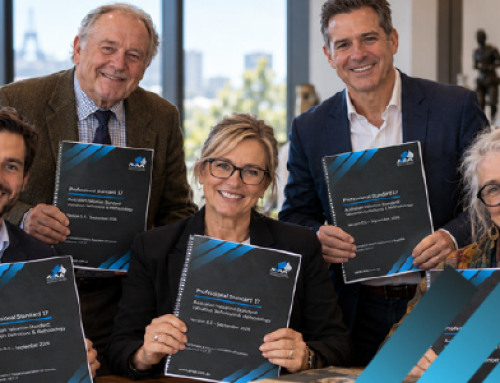
As implementation planning continues, investment in valuation guidance, recognition of the AVAA Professional Standards and taxpayer education will help reduce disputes and support the effective administration of the reforms. AVAA’s member-driven advocacy with the Australian Government on this issue is that asset valuation is not simply a technical issue. It is a critical component of the infrastructure upon which the future capital gains tax system will depend.
Don’t miss the 2026 Australian Valuers Symposia where the CGT reforms will be discussed in Sydney on 22 October 2026, Melbourne on 20 October 2026, and Brisbane on 23 October 2026. Secure your tickets and register online today.
.
Interested In Finding Out More?
If you’re interested in AVAA’s member-driven policy advocacy associated with the Capital Gains Tax (GCT) reforms, send an email to government.affairs@avaa.com.au or telephone 1300 928 165. You can also stay up to date by following AVAA on LinkedIn, X/Twitter and Facebook.
.