What constitutes Market Value, how should valuers interpret conflicting evidence, and when can professional judgement support a valuation in the absence of comparable sales? These questions are central to a new Australian professional standard for valuers, which is approaching completion following extensive industry consultation.
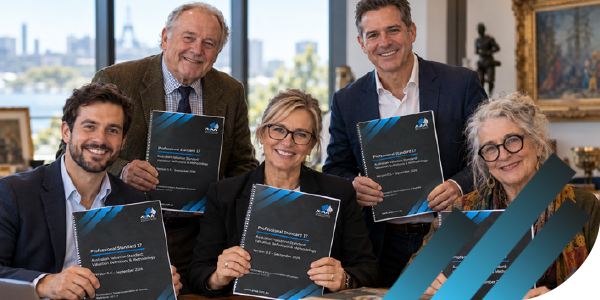
The Auctioneers and Valuers Association of Australia (AVAA) is finalising AVAA Professional Standard 17 – Valuation Definitions & Methodology, establishing a nationally consistent technical framework for valuing physical assets, including fine art, antiques, collectables, motor vehicles, machinery, plant and equipment.
One of the most consequential developments concerns the distinction between Market Value, Fair Value and withdrawing from common usage the expression Fair Market Value.
The International Valuation Standards Council (IVSC) has discontinued Fair Market Value as a defined international valuation basis because the expression lacks a consistently recognised meaning. The revised draft of AVAA Professional Standard 17 follows this approach, adopting Market Value as the appropriate terminology for an estimated exchange between willing, knowledgeable parties acting prudently and without compulsion, following proper marketing. The distinction matters as a valuation prepared for taxation, insurance, financial reporting or litigation may require different assumptions and produce materially different conclusions.
Fair Value retains a separate technical meaning, particularly under accounting and financial reporting frameworks, where its interpretation depends upon applicable standards, legislation and other authoritative requirements. Of note is that AVAA Professional Standard 17 also distinguishes Market Value from Insurance Replacement Value, Auction Appraisal Estimates, Investment Value, Liquidation Value and Scrap Value.
The objective of certified valuers in developing AVAA Professional Standard 17 is greater precision in valuation instructions, reporting and the interpretation of professional opinions, particularly where those opinions carry significant financial or legal consequences.
Beyond terminology, AVAA Professional Standard 17 establishes principles governing three principal valuation methodologies. The market evidence methodology requires valuers to assess comparable transactions, including adjustments for condition, provenance, rarity, specification, location and prevailing market conditions. Importantly, advertised asking prices are distinguished from completed transactions, recognising that listings alone may provide limited evidence of achievable value.
The cost-based methodology considers replacement or reproduction expenditure, adjusted for physical deterioration, functional obsolescence and economic obsolescence. It expressly recognises that replacement cost and Market Value may differ substantially. The income-based methodology examines anticipated economic benefits through capitalisation or discounted cash flow analysis, with particular attention to assumptions concerning future income, expenditure, growth and risk.
Your chance to discuss the current draft of the standards and its utility comes with the 2026 Auctioneers and Valuers Symposia that’s being held in Sydney on 21 October 2026, Melbourne on 20 October 2026 and Brisbane on 23 October 2026. You’ll get to play an active role in the discussions that will help frame the final version of the Standard, so if you haven’t booked your ticket, be sure to do so today.
The October Auctioneer and Valuer Symposia in Melbourne on 20 October, Sydney on 21 October and Brisbane on 22 October provide an opportunity for practitioners to examine these provisions, challenge assumptions and influence the final Standard.
Perhaps most importantly for specialist valuers, the Standard addresses the realities of thin markets. Rare artworks, historic objects, specialised machinery and unique collectables may have few comparable transactions. PS17 recognises that limited evidence does not prevent a defensible valuation, provided the valuer appropriately considers historical transactions, broader market information, specialist advice and valuation uncertainty. Where multiple methodologies produce different indications of value, reconciliation must reflect their evidentiary reliability rather than simply averaging the results.
The draft also addresses retrospective valuations, requiring assessments to reflect information known or reasonably available at the relevant valuation date. Together with AVAA Professional Standards 6 and 14, covering valuation reporting and engagement terms respectively, PS17 will connect the purpose of an engagement with the basis of value, methodology, supporting evidence and reported conclusion.
Its significance of AVAA Professional Standard 17 extends beyond AVAA membership. A nationally consistent framework, aligned with international valuation principles, will strengthen discussions with governments, taxation authorities, insurers, financial institutions and regulators about valuation requirements, professional competence and reliance upon valuation reports. It will also provide an important technical reference for discussions concerning professional indemnity insurance, valuation risk and the recognition of reasonable differences in professional judgement.
With the draft approaching completion, AVAA welcomes further technical contributions from members and the wider valuation profession. Consultation on AVAA Professional Standard 17 remains open until 31 October 2026 and be sure to have your say and don’t miss the 2026 Auctioneers and Valuers Symposia
.
Interested In Finding Out More?
If you’d like more information on AVAA Professional Standard 17 send an email to standards@avaa.com.au or telephone 1300 928 165. You can also stay up to date by following AVAA on LinkedIn, X/Twitter and Facebook.
.