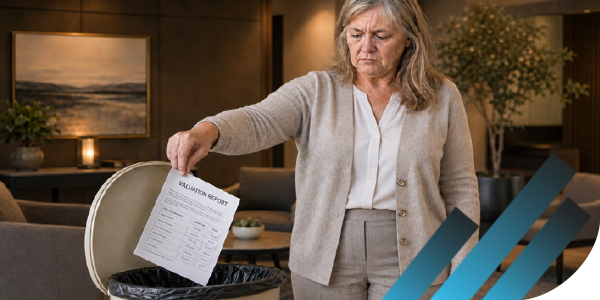
Not every valuation report provides the protection that clients expect. While certified valuers produce thorough, well researched valuation reports, others provided by so-called valuers surprisingly little analysis despite assigning values of many thousands, or even hundreds of thousands, of dollars. A report that lacks supporting evidence and proper explanation may not provide the confidence needed when relied upon for insurance, taxation, family law, probate or other important financial decisions.
Consumers should know what a professional valuation report looks like before engaging a valuer in order to protect their interest.
One of the more concerning trends within the profession is the appearance of valuation reports that contain little more than a description and a value. Sadly, some so-called valuers have, in the past, given clients a ‘valuation report’ for an artwork worth several hundred thousand dollars reported on a single page, for jewellery items and watches valued at tens of thousands of dollars summarised. These reports often have limited commentary on how the value was determined. While these ‘valuation reports’ may appear convenient, they often leave unanswered the most important question, how was the value determined?
A valuation is much more than a dollar figure. It is a professional opinion from a certified valuer that should be supported by appropriate investigation, analysis and evidence. A comprehensive valuation report identifies the asset, explains the purpose of the valuation, sets out the methodology adopted, discusses relevant market evidence and clearly records the assumptions and limitations that affect the conclusion. This information allows clients, insurers, the courts, and even the Australian Taxation Office (ATO) and other interested parties to understand the reasoning behind the opinion.
What Underpins A Quality Valuation Report —
A quality valuation report that is fit-for-purpose has been written to reflect AVAA Professional Standard 6: Minum Valuation Report Requirements that establishes the minimum requirements for professional valuation reports. It requires clear identification of the asset, the purpose of the valuation, methodology, supporting market evidence, assumptions, limitations and certification. The standard promotes consistency, transparency and reporting that can withstand scrutiny by clients, insurers, courts and government agencies.
For high value assets, this level of detail is essential. A significant artwork may require consideration of authenticity, provenance, artist attribution, condition, exhibition history and comparable market sales. Jewellery valuations commonly require assessment of gemstone identification and grading, precious metal content, craftsmanship, hallmarks, condition and current market conditions. These matters cannot usually be addressed adequately in a brief report.
The consequences of inadequate reporting often emerge long after the valuation has been completed. An insurer may request supporting evidence following a claim. A court may examine the reasoning behind the valuation. The ATO or an accountant may require the report to justify a clients taxation claim. If the report does not adequately explain how the conclusion was reached, confidence in the valuation may be diminished, or even set aside by the court or dismssed by the ATO.
Clients should feel comfortable asking whether a valuation complies with recognised professional standards and requesting a sample report before proceeding. A professionally prepared valuation report should demonstrate the work undertaken rather than simply state the conclusion.
Who Prepares Professional Valuation Reports —
When wanting a professional valuation report, be sure to engage an AVAA Certified Valuer (CVAu) who has demonstrated their professional competence through independent assessment, including the submission of valuation reports that satisfy AVAA Professional Standard 6: Minum Valuation Report Requirements. They are committed to continuing professional development, ethical conduct and recognised professional standards, providing you with greater confidence that their valuation has been prepared with integrity and professional care. The AVAA Member Directory allows you to search for certified valuers with specialist asset valuation expertise.
A commitment to work in accordance with the AVAA Professional Standards reflects the professionalism of the valuer. Reports that fail to adequately explain the valuation process may expose clients to unnecessary risk and can affect the credibility of the valuer if their work is later examined. As expectations from insurers, courts, government agencies and regulators continue to increase, comprehensive reporting is becoming an essential part of professional practice rather than an optional extra.
Choosing a certified valuer on the AVAA Member Directory who follows recognised professional standards provides confidence that the valuation has been prepared with independence, transparency and accountability. When significant financial decisions depend on a valuation, the quality of the report is just as important as the value itself.
.
.
Interested In Finding Out More?
If you’d like more information on the AVAA Professional Standards, send an email to standards@avaa.com.au or telephone 1300 928 165. You can also stay up to date by following AVAA on LinkedIn, X/Twitter and Facebook.
.