
Trading cards have evolved well beyond childhood collectibles. They are now a serious global asset class attracting interest from collectors, insurers, investors, lenders and legal professionals. The global trading card market is estimated at approximately USD$13 billion in 2024 and is forecast to exceed USD$21 billion within the next decade, driven by strong growth across sports cards, trading card games and licensed entertainment products.
As values rise, demand is increasing for reliable valuation advice supported by specialist knowledge, market analysis and authentication expertise. Determining the value of a trading card is rarely as simple as reviewing a recent online sale. Credible valuation requires careful consideration of condition, rarity, authenticity, provenance, market timing and buyer demand, all within a market environment that can shift rapidly.
Different sectors of the trading card market operate according to very different commercial drivers. Trading card games such as Pokémon, Magic: The Gathering and Yu-Gi-Oh derive value from a combination of rarity, gameplay relevance and the enduring popularity of the underlying intellectual property. Sports cards are closely tied to athletes’ performance, cultural relevance, and collector sentiment, with rookie cards often experiencing substantial price movements tied to career developments.
Entertainment and memorabilia cards, including movie, music and pop culture releases, are also attracting significant attention. Limited production runs, artist collaborations and strong nostalgic appeal have contributed to substantial premiums for rare examples. In each category, valuers require genuine card-specific expertise rather than simply general knowledge of collectables.
Australia’s trading card market continues to expand alongside global trends. Pokémon, AFL, NBA basketball, cricket and Yu-Gi-Oh remain particularly active sectors, with increasing interest from collectors seeking insurance valuations, estate assessments and advice relating to sales and acquisitions.
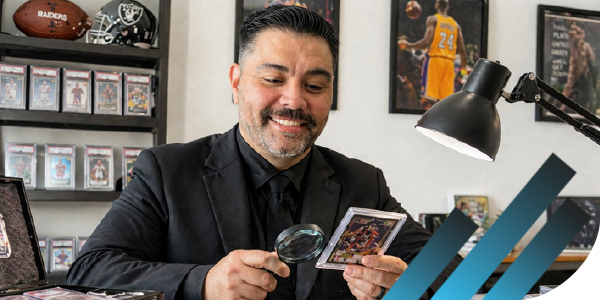
An expert with the respected AVAA Certified Valuer (CVAu) credential, Jonathan Marin CVAu of TCG Valuations, says the market has matured considerably in recent years.
“We are seeing more participants treat trading cards as a genuine alternative asset class, seeking professional valuations for insurance cover, estate settlement and secured lending. High-end transactions are now a regular occurrence, with individual cards realising prices in the millions of dollars internationally,” Mr Marin says.
Recent international sales highlight the scale of the market. A PSA 10 Pikachu Illustrator card sold for more than USD$6 million in early 2026, while a Michael Jordan and Kobe Bryant dual logoman card reportedly achieved USD$12.9 million. These sales reflect a market that increasingly operates alongside other recognised collectable and alternative investment sectors.
At the same time, risks remain substantial. Counterfeit cards, trimming, surface restoration, and resealed vintage products continue to present challenges for collectors and buyers. Even professionally graded cards require scrutiny, particularly where older grading standards or known inconsistencies may affect market confidence.
Condition assessment remains central to valuation outcomes. Small differences involving surface quality, corners, edges and centring can materially influence value. Although third-party grading has improved consistency across the industry, differences among grading providers and evolving grading methodologies can still lead to inconsistent results.
“Condition is never just a number on a slab. It is a spectrum of attributes across surface, corners, edges and centring that experienced valuers read carefully when translating a technical grade into a credible, supportable market value opinion,” Mr Marin says.
One of the more significant recent developments has been the growing overlap between trading cards and fine art. Artists are increasingly producing original works directly on trading cards, with some one-of-one pieces attracting strong international demand and commanding premium prices. This convergence raises additional issues surrounding provenance, attribution and valuation methodology.
Unlike assets traded on a single transparent exchange, trading cards are bought and sold through auctions, private transactions and online marketplaces such as eBay. Liquidity can vary considerably, and comparable sales may not always be repeatable under similar market conditions. Timing, buyer depth and platform exposure therefore remain important considerations when forming valuation opinions.
“Comparable sales data is useful, but not definitive. Skilled valuers filter anomalies, adjust for market context, and ensure that each comparison truly reflects the asset being assessed,” Mr Marin says.
Demand can also move quickly. Sporting performance, cultural trends and nostalgia can rapidly influence prices, creating volatility that may not represent sustainable long-term value. This makes professional judgement particularly important where valuations are relied upon for insurance, lending, legal proceedings or estate matters.
“In fragmented markets, liquidity matters as much as price. Valuers must consider not just what something sold for, but how reliably that outcome can be repeated,” Mr Marin says.
As trading cards continue attracting broader commercial and professional attention, informed valuation practice is becoming increasingly important. Reliable valuation advice depends not simply on identifying recent sales, but on carefully analysing evidence, market behaviour and asset-specific risks to produce conclusions that are credible, supportable and professionally defensible. This is what makes engaging an AVAA Certified Valuer (CVAu) with expertise in trading card valuation so important.
…
.
.
Interested In Finding Out More?
If you’re interested in the ACAA Certified Valuer professional credential, send an email to certification@avaa.com.au or telephone 1300 928 165. You can also stay up to date by following AVAA on LinkedIn, X/Twitter and Facebook.
.